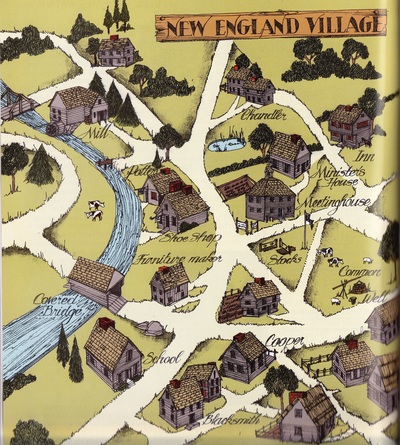
My upcoming novel is titled Hatfield, 1677, for the small town beside the Connecticut River in what is now western Massachusetts. In 1677, it was one of the most remote habitations in Massachusetts Bay colony, a town of roughly 50 homes in the midst of pastures and farmland in the midst of wilderness.
Hatfield was one of a small cluster of very small towns, including Hadley across the river, Deerfield ten miles to the north and Northampton ten miles to the south. Springfield was a two-day ride, and Albany and Boston five-days to the west or east, respectively. The largest of those towns, Boston, claimed less than 3,000 Europeans.
The people who lived in Hatfield were Puritans, not Pilgrims. Their parents came to America on John Winthrop’s ships, most notably, The Arabella, in the 1630s. This second wave of immigrants were less zealous in their religious fervor and more prepared for the rigors of agrarian life in a new land. They initially agreed, by treaty, to the sovereignty of the Native People as a nation, with all the rights that entailed. Trading, clearing forests, and planting crops were somewhat amicable between Puritans and the Native Algonquian and Iroquois people.
Until around 1670.
 Laura C. Rader