As an example of confidence and optimism, and an amazing feat of navigation in a day and age without a means to measure longitude (basically, distance across the ocean), the voyage of Christopher Columbus from Europe to North America is impressive. As we all know, however, his misidentification of the Caribbean islands as the East Indies, his inadvertent or intentional opening of the continent to European invasion, and thereby, his shared blame for the resulting subjugation and massacre of the First Nation, are not worthy of celebration.
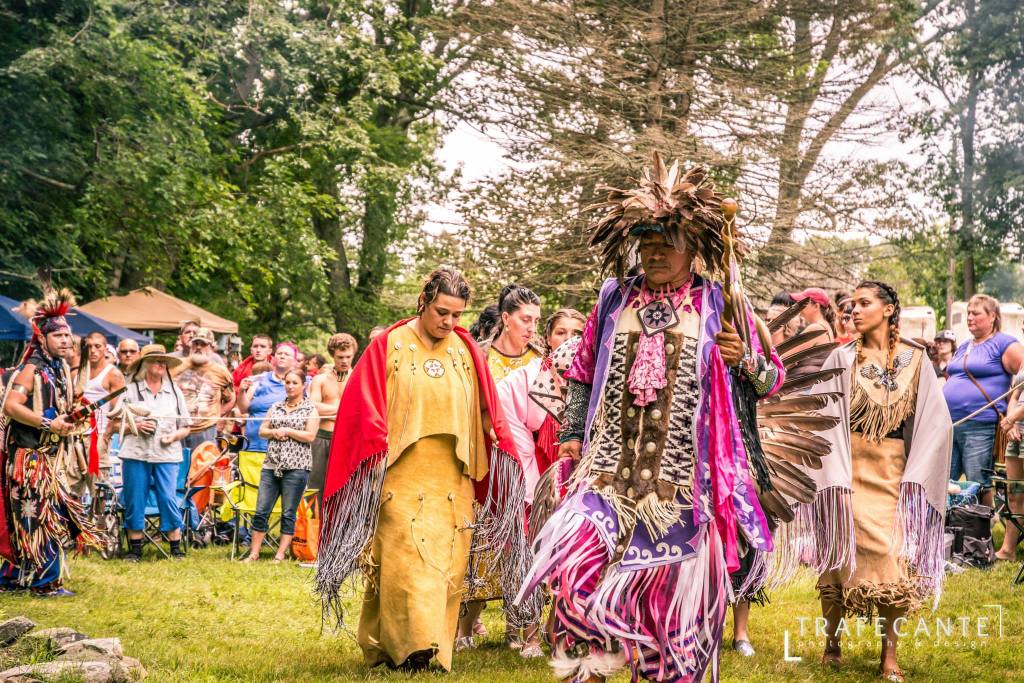
So that is why this post will instead focus on the Nipmucs, the predominant First Nation Algonquian tribe in my novel Hatfield 1677. A partial bibliography of the resources I used is posted separately.
The Northeast woodlands region encompassed what is today New England —Maine, Vermont, New Hampshire, Massachusetts, Connecticut, and Rhode Island—and also southern Quebec, Canada. Over a dozen Algonquian tribes lived in this region, united by their similar though dialectically different Algonquin language. They were nomadic, traveling to the northern parts of their region in the winter to hunt, and to the southern ranges the rest of the year to farm and fish. The Nipmucs southern home was where Hatfield, Hadley, Deerfield, and Northampton were settled, in the Connecticut River Valley of what is now Massachusetts.
They were a versatile people, adapting to their environment through migration and a variety of survival skills. They built their homes and canoes from birchbark in the warmer months, and tree trunks and branches in the winter. They cleared forests by setting fire to them each fall so they could plant corn in the spring. They were friendly with the other Connecticut River Valley tribes—Pocumtucks, Norwottucks and others— and often allied with them, first against their ancient enemies, the Iroquois, and later, against the European colonists.
They were, at first, able to live alongside the European settlers in relative harmony, farming, fishing, and trading with each other. Through this interaction, goods, foods and even languages were exchanged. But as European numbers increased, so did European avarice and European justification for tipping the balance of power with the First Nation by declaring that Europeans were a superior race.
In Groton, Massachusetts, the Nipmuc Nation has its tribal headquarters, and it is there that the Nipmuc language has not only been resurrected but is also taught. https://www.nipmucnation.org/
Unfortunately, although the state of Massachusetts recognizes the Nipmuc Nation, our federal government does not, so the Nipmuc people do not receive any federal assistance. I relied upon their online resources for the names and spoken language of my Nipmuc characters, and hope that my novel honors their people.
 Laura C. Rader
4 responses to “Indigenous Peoples’ Day”
Terrific piece. As to your paragraph 5: I think the Europeans brought their sense of superiority with them, especially the English, who took the epidemic that wiped out the Indians where they landed as a sign that God had done it for His Chosen People. The Indians and the whites then had very different reason and strategies for getting along, until, as you say, the English were numerous enough to show their true colors. ________________________________
LikeLiked by 1 person
Thank you, and agreed. Keep in mind that smallpox was brought to North America before Roanoke. Probably by the Spanish explorers in the late 16th century, and archaeologists theorize that over 50% of Native Americans in North America had already succumbed to smallpox by the time the Pilgrims landed.
LikeLike
I think you did a fine job of honoring the Nipmuc in the book, and addressing the conflict. Well done!
LikeLiked by 1 person
Thank you so much, Tom!
LikeLike